Interaction channels
Connect your Tray AI Agents to the platforms where your users interact
Interaction channels let users communicate with your Tray AI Agents through their preferred platforms. Each channel connects to the same agent—with all its tools, knowledge, and capabilities—ensuring a consistent experience regardless of where users interact.
You can enable multiple channels for a single agent, giving users flexible access while maintaining centralized control from the Tray platform.
Getting Started
Setting up an interaction channel takes just a few steps:
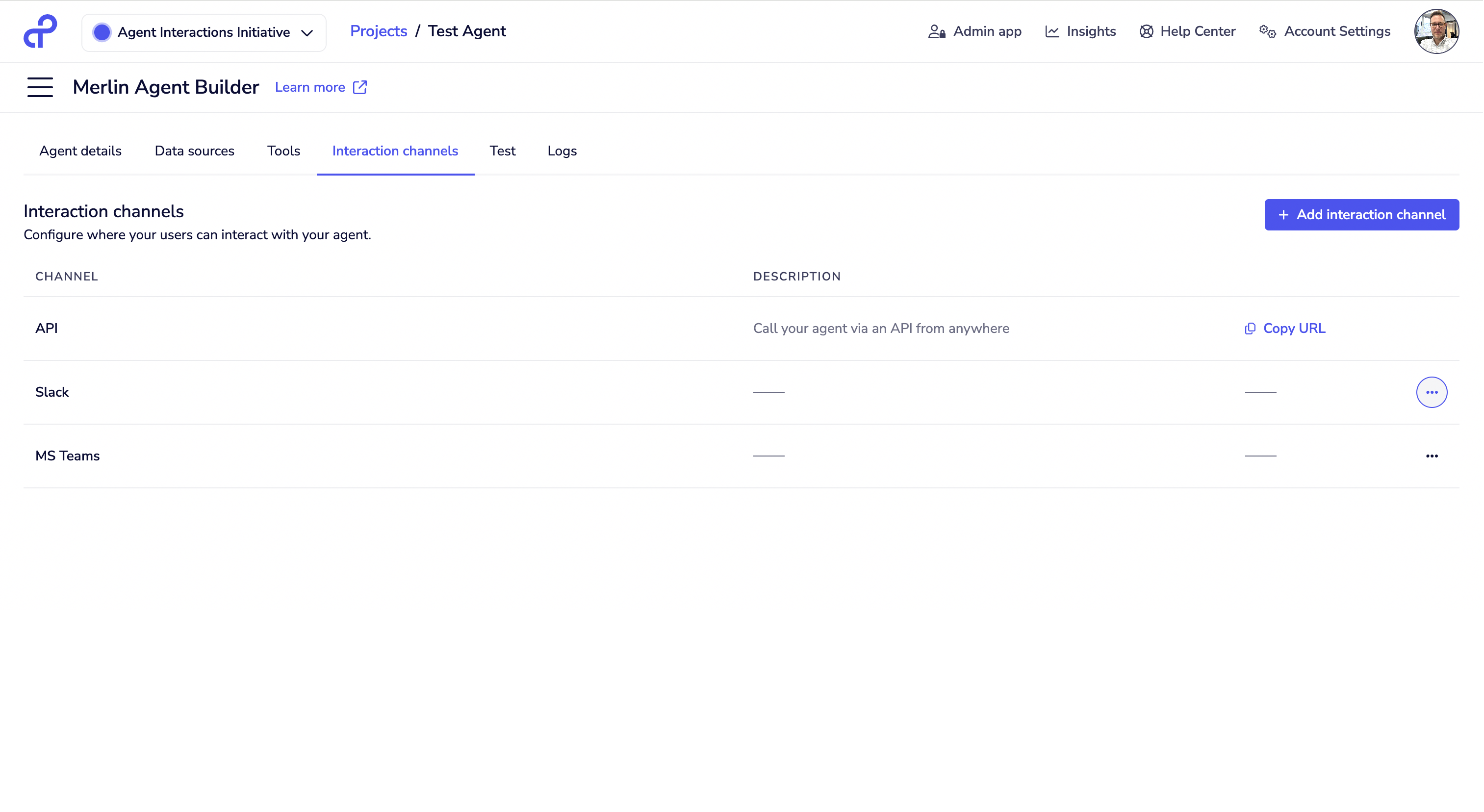
- Navigate to the "Interaction Channels" tab in your Agent builder
- Click "Add interaction channel" if you want to add Slack or Teams channels. If you want to use the API endpoint, simply copy the provided URL.
- Select your channel type and follow the setup instructions
- When complete, right click the created interaction channel to access the interaction channel workflow assets or configuration details
API Endpoint
The API endpoint provides programmatic access to your agent through standard HTTP requests.
Setup
- Go to the Interaction Channels tab
- Copy the API Channel endpoint URL
- Use standard
HTTP POSTrequests. The response format is determined by your tool's workflow response schema. To preview the expected format, navigate to the tool's workflow and examine the response schema in the "Trigger Event Reply" step.
Usage
The API endpoint can be integrated with various systems:
- Help desk systems - Embed agent capabilities into support workflows
- Chatbots and voice systems - Power conversational interfaces
- Mobile applications - Provide AI assistance on mobile devices
- Internal tools - Automate tasks in custom dashboards and applications
Slack
Slack channels enable users to communicate with Tray AI Agents through natural conversation in their Slack workspace. When you create a Slack Interaction Channel, Tray handles the technical setup automatically: creating the Slack App, installing pre-built workflows, and configuring permissions—all managed through the Agent Builder interface.
Setup
For guided setup instructions, see Setting up Slack Interactions. This guide covers Slack app creation, permissions configuration, and authentication steps.
Microsoft Teams
Teams channels bring your agent directly into Microsoft Teams workspaces where your users collaborate, enabling natural conversation and AI-powered assistance within their existing communication workflows.
Setup
For guided setup instructions, see Setting up Teams Interactions. This guide covers Teams app creation, permissions configuration, and authentication steps.